
The four rules in detail
Punigo has four rules:
- Black and White take turns placing stones. You may pass your turn.
- A stone or connected group is captured when it has no adjacent empty points left.
- You cannot make a move that repeats a recent position.
- The game ends after two consecutive passes. The player with more stones on the board wins.
The rules are short, but there are a few places where beginners often get stuck. Let's go through them one at a time with diagrams.
Rule 1: Black and White take turns
Stones go on the points where the lines cross (the intersections), not inside the squares. Black plays first, then White, then Black, and so on, one stone at a time. A stone never moves once it is placed, unless it is captured.
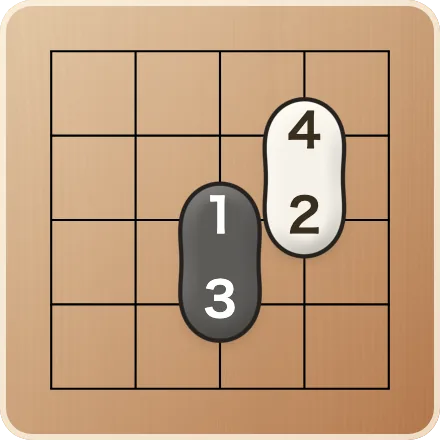
If there is nowhere you want to play, you can pass and give the turn to your opponent. A pass hands your opponent a free move, though, so keep playing while there are still moves that gain you something (filling your own eyes is not one of them, as Rule 4 explains).
Rule 2: Stones with no liberties are captured
Liberties
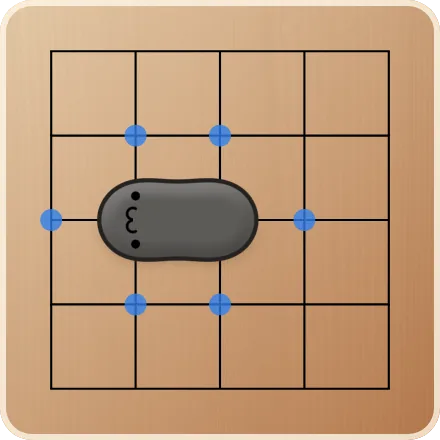
The empty points directly above, below, left and right of a stone are its liberties. Diagonal points do not count. You can think of liberties as the stone's breathing space.
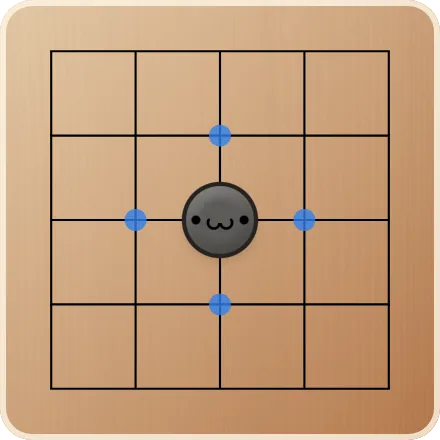
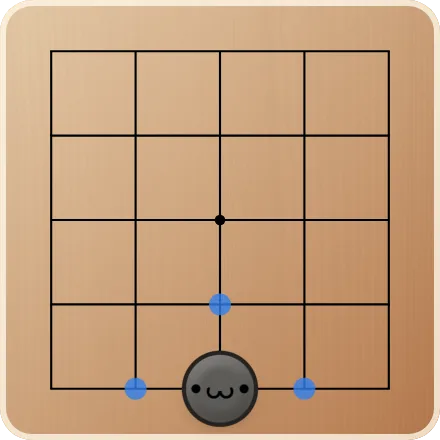
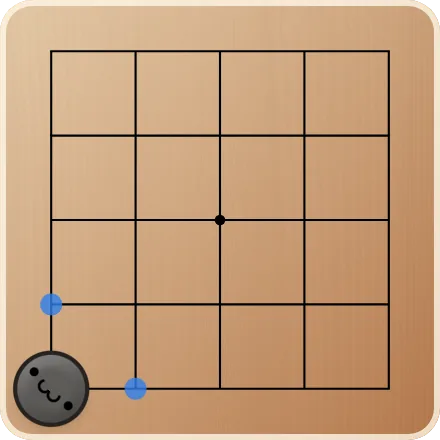
Stones near the edge start with fewer liberties, so they are easier to capture.
Connected stones share liberties
Stones of the same color that touch up, down, left or right are connected and form one group. A group's liberties are all the empty points around the whole group. An empty point next to two of its stones still counts only once.
Atari and capturing
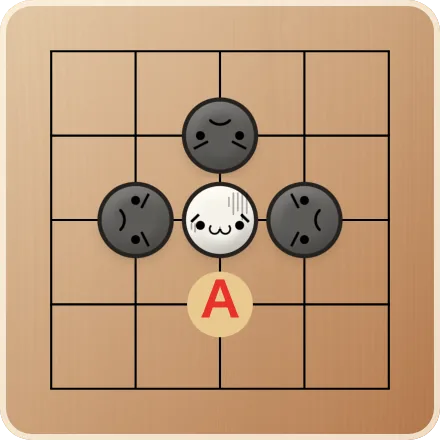
When a stone or group is down to its last liberty, it is in “atari”. If the opponent fills that last liberty, the stones with no liberties are removed from the board.
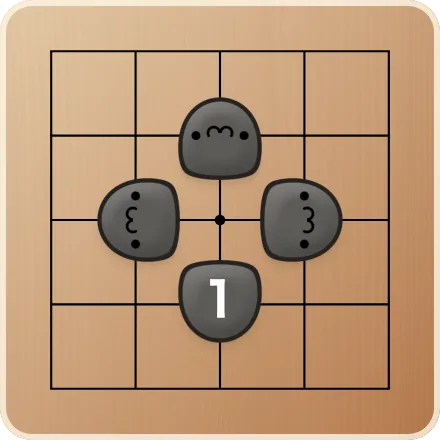
Groups work the same way. When every liberty of a group is filled, the whole group is captured at once.
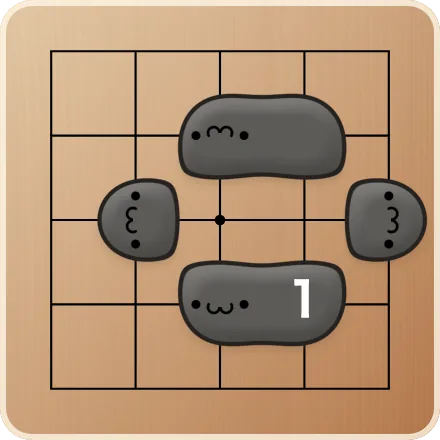
Points where you cannot play
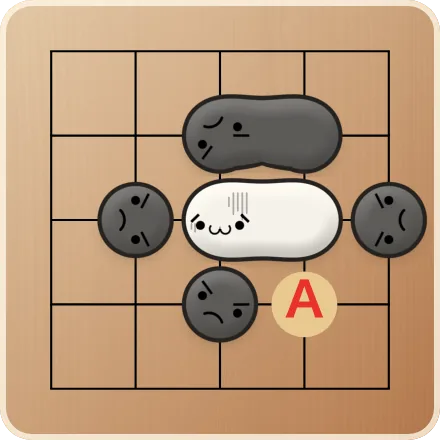
You cannot play a stone that would have no liberties the moment you place it.
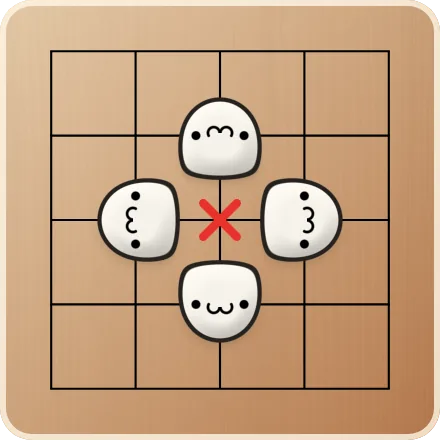
There is one exception: if your move captures opponent stones, you can play it. The captured stones leave empty points behind, and those become your stone's liberties.
Rule 3: No going back to a recent position
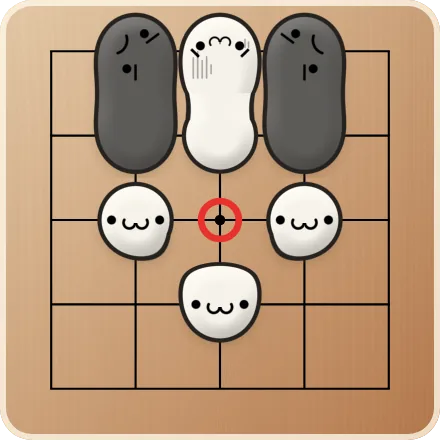
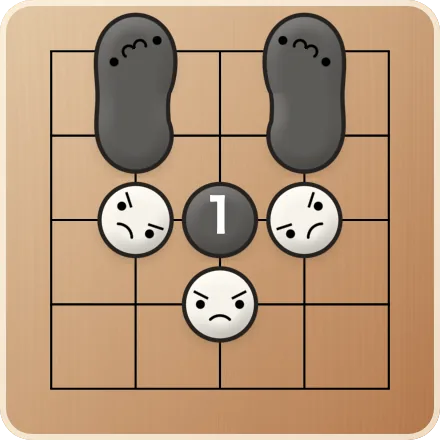
In shapes where each side can capture a single stone, the players could capture back and forth forever. To prevent that, you may not play a move that makes the stones on the board look exactly as they did a few moves ago.
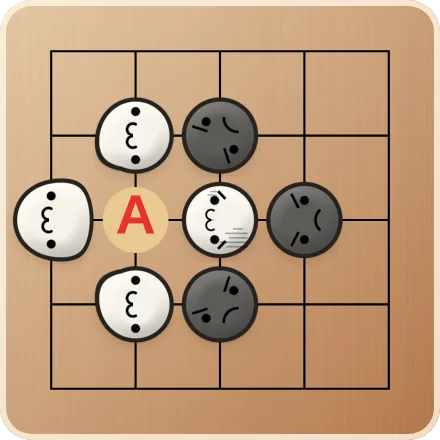
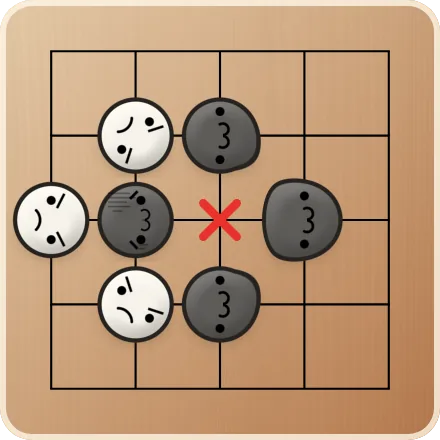
White may recapture once it has played somewhere else and Black has replied. If Black uses that reply to connect at ×, the fight is over. This back-and-forth shape is called a ko. In Punigo, trying to recapture right away shows the message “You can't play there right now — it would repeat the position”.
Rule 4: Two passes in a row end the game; the player with more stones wins
When only moves that gain you nothing are left, pass. When Black and White pass one after the other, the game is over.
Then count the stones on the board. Empty points and captured stones do not count. Add komi to White's stones, and the larger number wins.
Because empty points don't count, before the game ends you fill your territory (the area your stones surround) with your own stones. But not all of it.
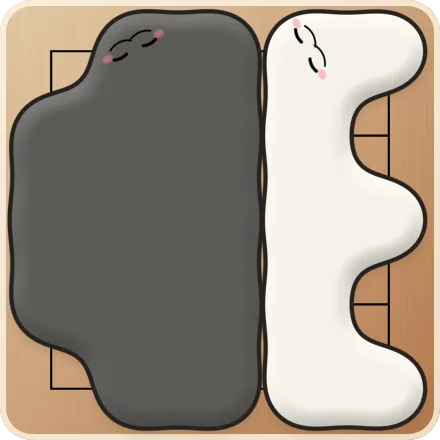
Why not fill every empty point? Because if you fill too many of the empty points inside your own group, your opponent can capture it. This idea of “eyes” is the most important thing to understand to win. “Living and dead stones” explains it in detail.
Summary
- Place one stone at a time on the intersections, Black first. You may pass.
- A group with no liberties left is captured as a whole.
- You cannot play where your stone would have no liberties, unless the move captures.
- You cannot make a move that repeats a recent position.
- Two passes in a row end the game. Count the stones on the board, adding komi to White; the higher total wins.