
Capturing and escaping
In Punigo, the player with more stones on the board at the end wins. Capturing your opponent's stones reduces their count and frees up space for your own stones. That is why reading out captures is at the heart of every game.
If you see atari, capture
A stone with only one liberty left (in atari) can be captured by playing on that liberty. Get into the habit of checking the board for stones in atari before every move. In Punigo, stones in atari look worried, which makes them easy to spot.
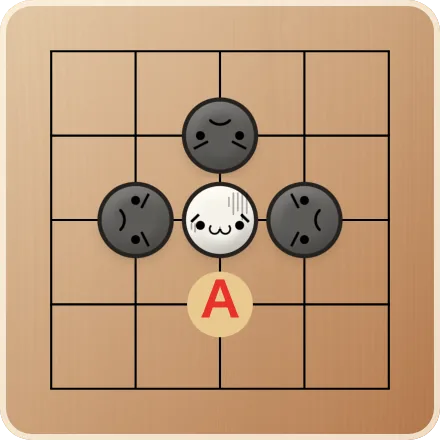
If you are in atari, escape
When one of your stones is in atari, extend into its last liberty to escape. Extending gives the group more liberties, so it cannot be captured right away.
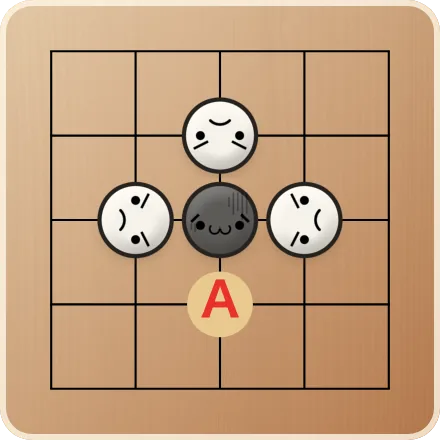
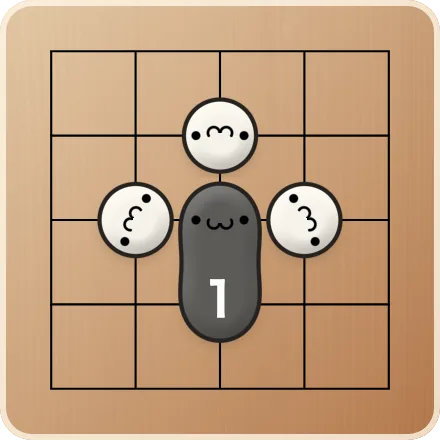
Be careful, though: escaping in a direction where you gain no liberties, or where you are put straight back into atari, does not help. Before you run, count the liberties you will have after the move. Running toward your own stones and connecting to them is the safest choice. Running with stones that can't be saved only gets more of them captured; in that case, don't run, and play somewhere important instead.
Capture to save yourself
Running away is not the only answer when your stone is in atari. If a neighboring opponent stone is also in atari, capturing it saves your stone too, because the captured stones leave empty points that become your liberties.
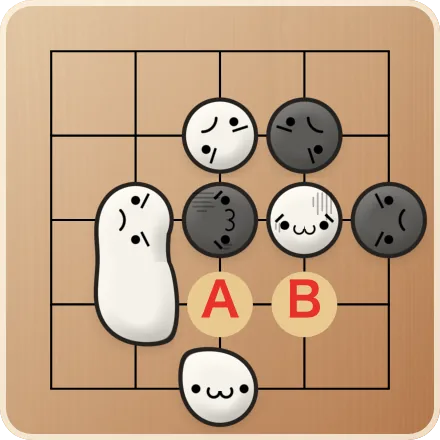
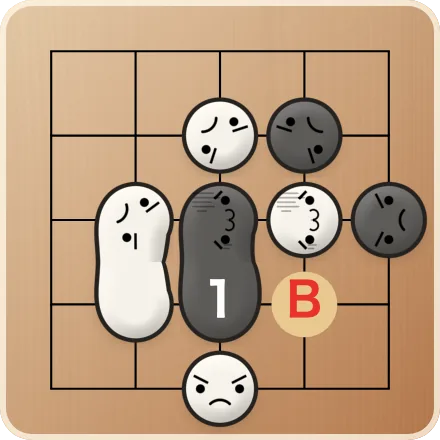
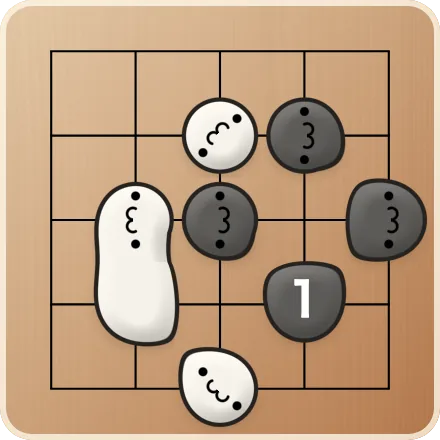
When you are put in atari, count the liberties of the neighboring opponent stones before you run.
Double atari
A move that puts two separate opponent stones (or groups) in atari at the same time is called a double atari. Your opponent can save only one of them, so you capture the other.
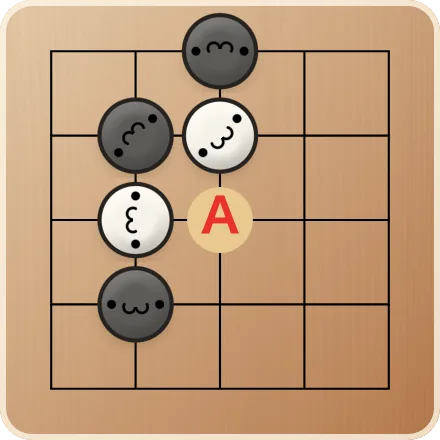
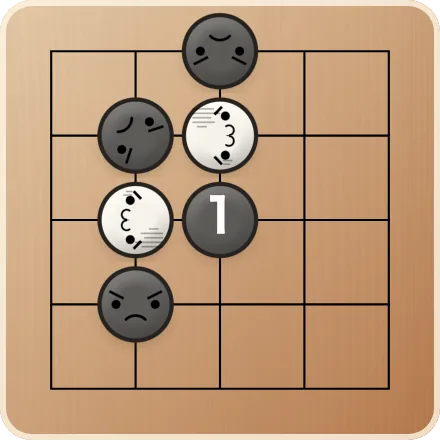
Give atari from their friends' side
When you chase your opponent's stones, the side you give atari from matters. If you leave open the side toward their friends, they will run there and connect. Instead, block the side where their friends are, and drive them toward the edge or your own stones.
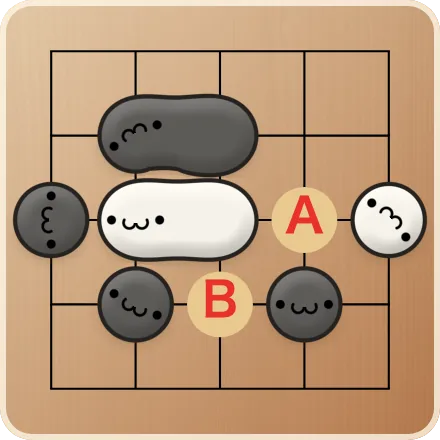
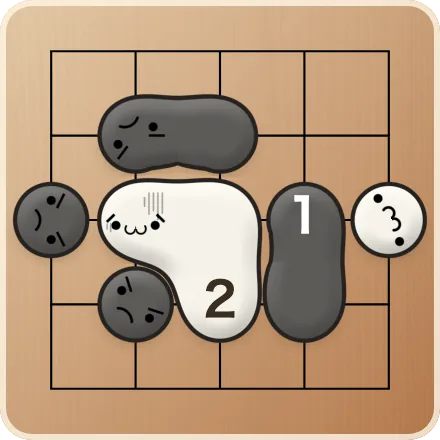
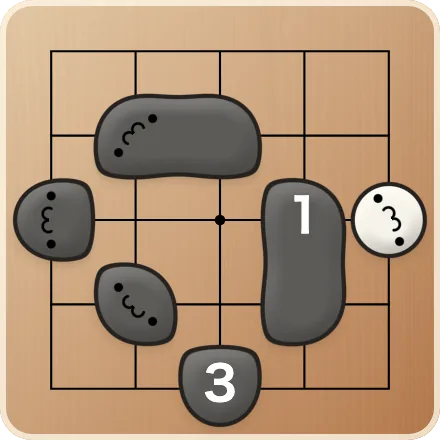
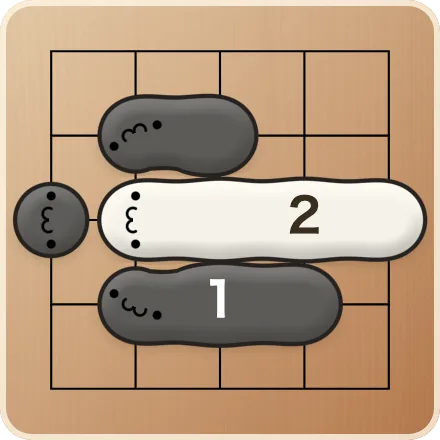
The snapback
A snapback is a technique where you deliberately let your opponent capture one stone, then immediately capture their whole group in return.
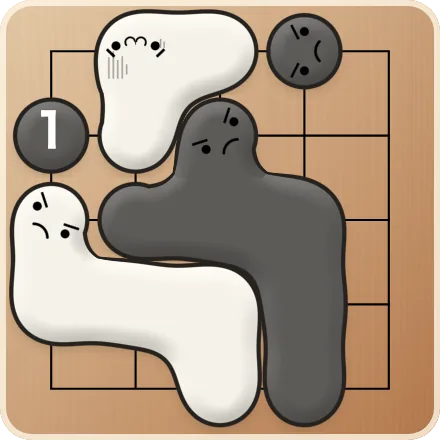
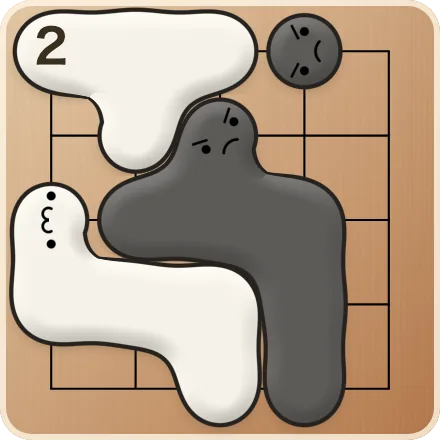

Black 3 is on the same point as Black 1, yet it does not break Rule 3, because four white stones disappear and the board does not return to an earlier position. When only one stone would be recaptured, the move can repeat a position and be illegal (see Rule 3).
Summary
- Before every move, look for stones in atari (look for worried faces).
- When you are in atari, escape in a direction that gains liberties or connects to your stones.
- Even when you are in atari, you may be able to save yourself by capturing.
- A double atari lets you capture one of two stones.
- When chasing, give atari from the side where their friends are.
Problems 1–7 and 9 let you practice capturing and escaping. → 10 practice problems